

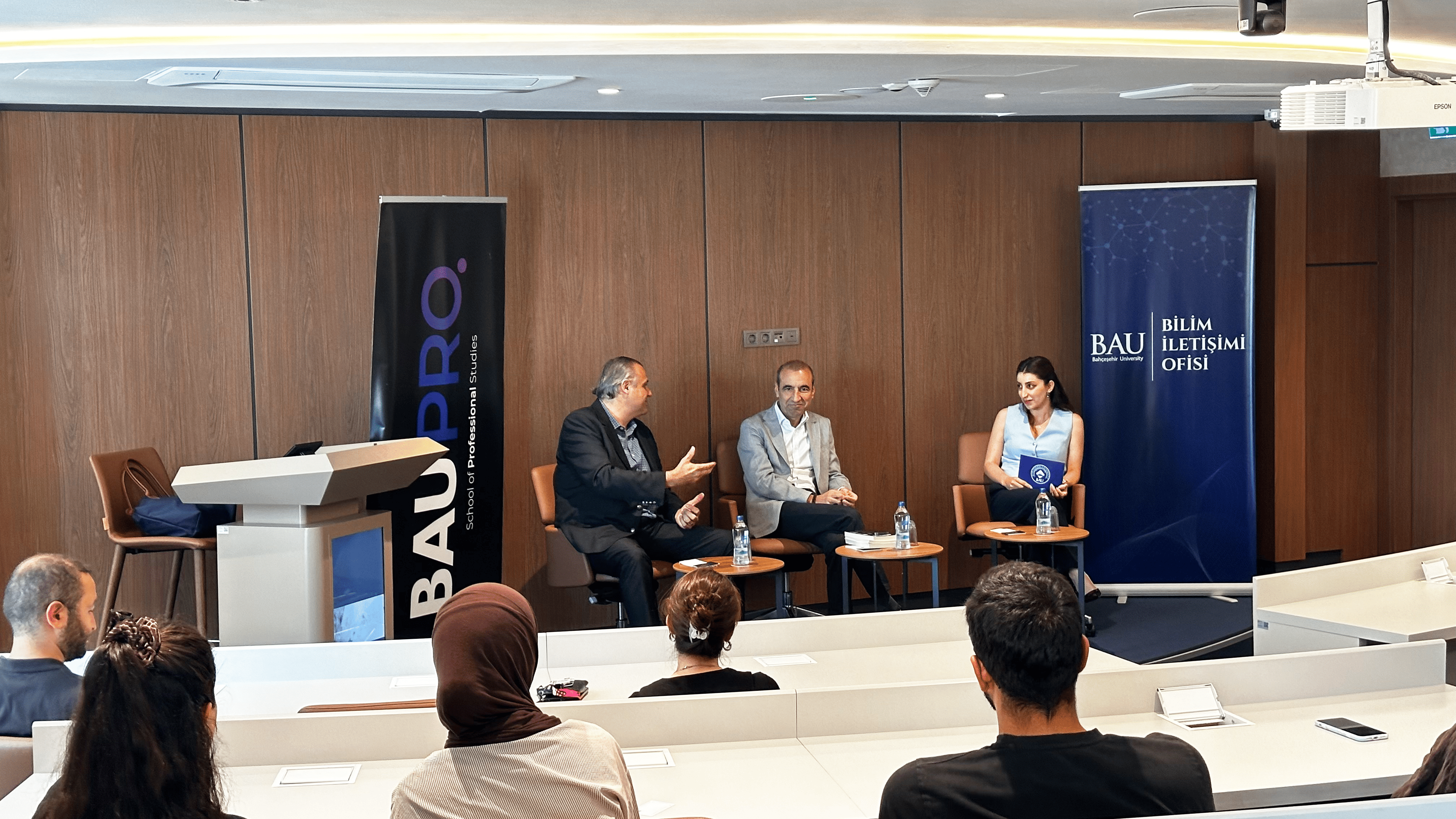
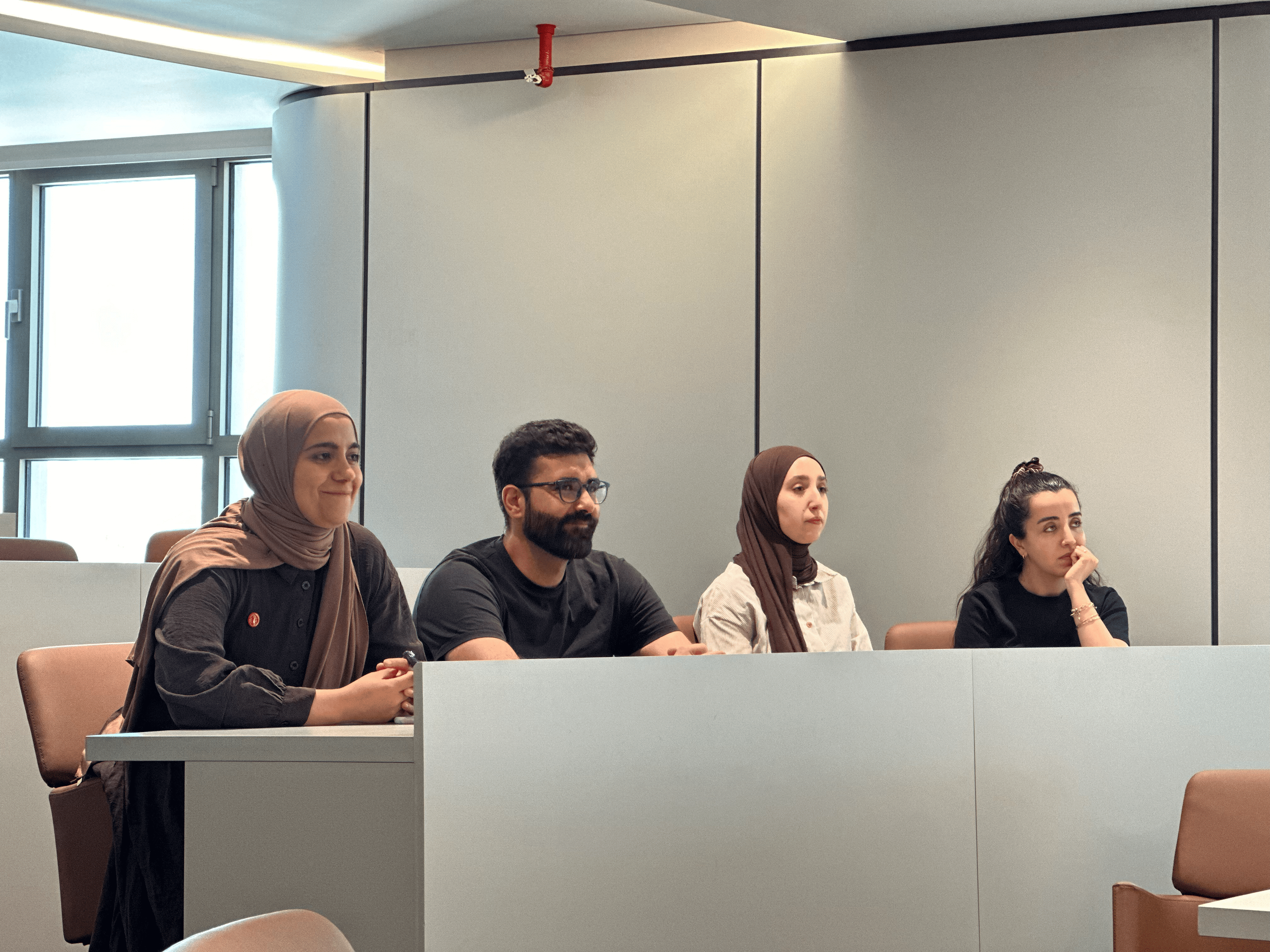
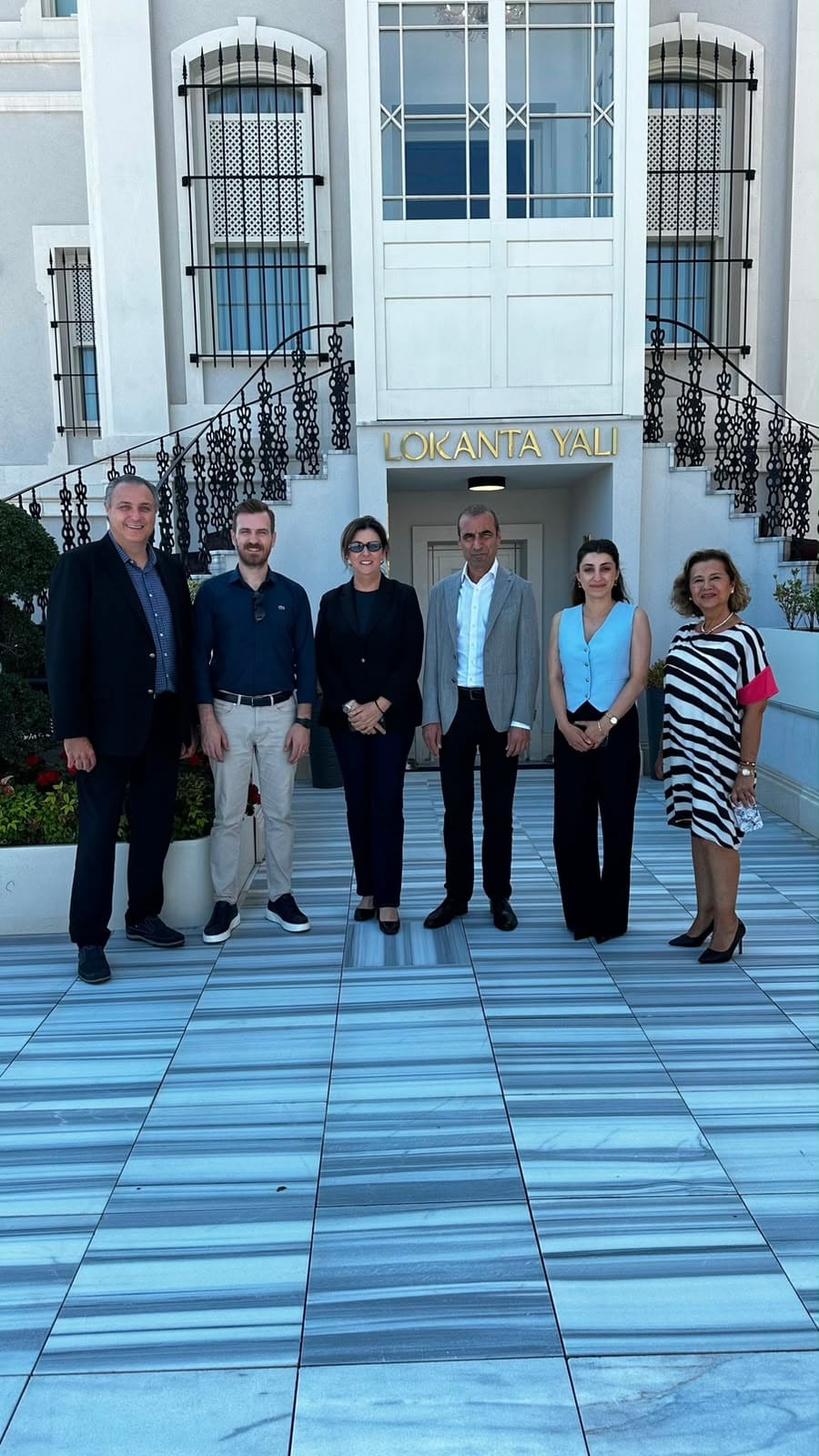
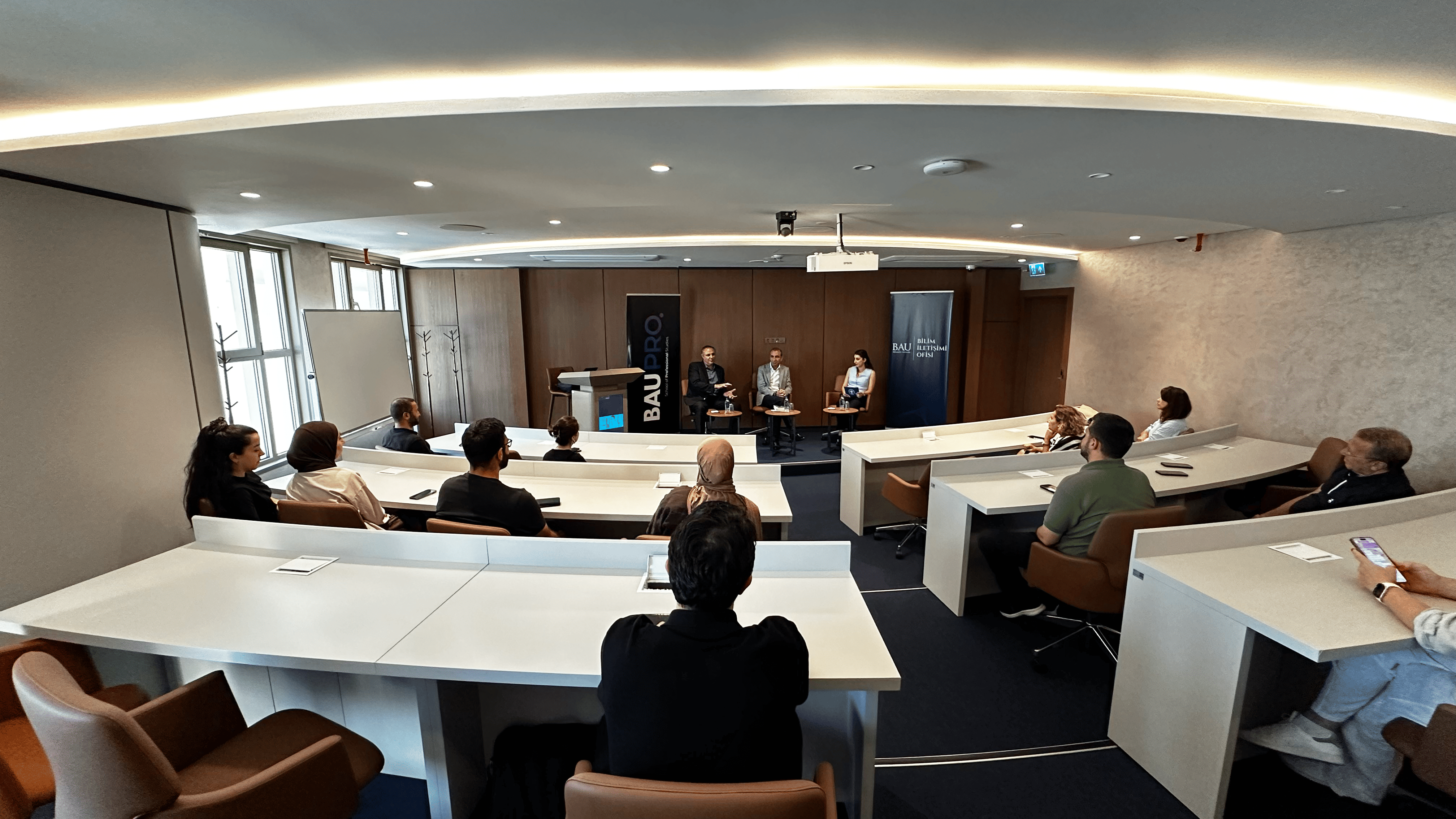
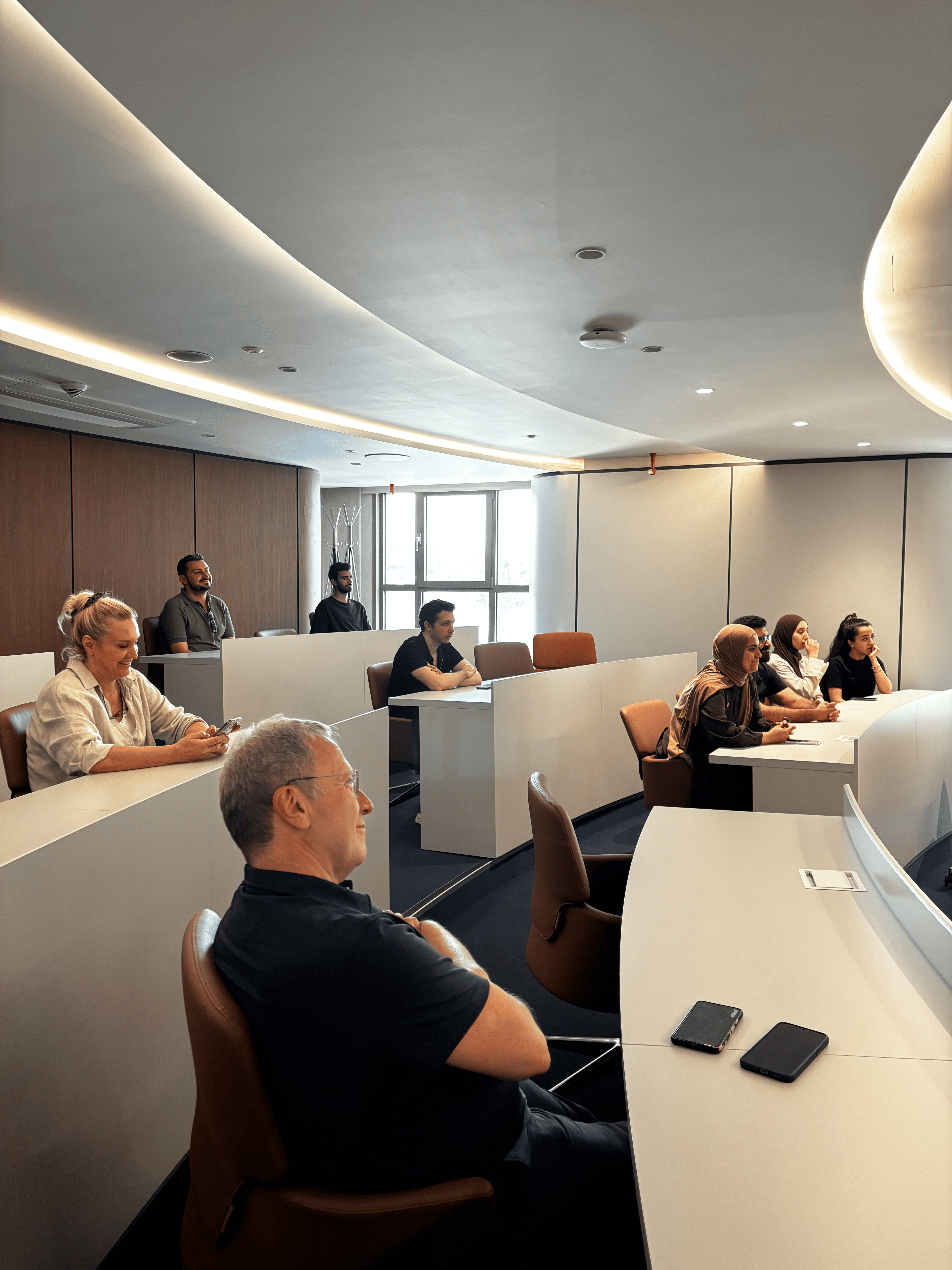
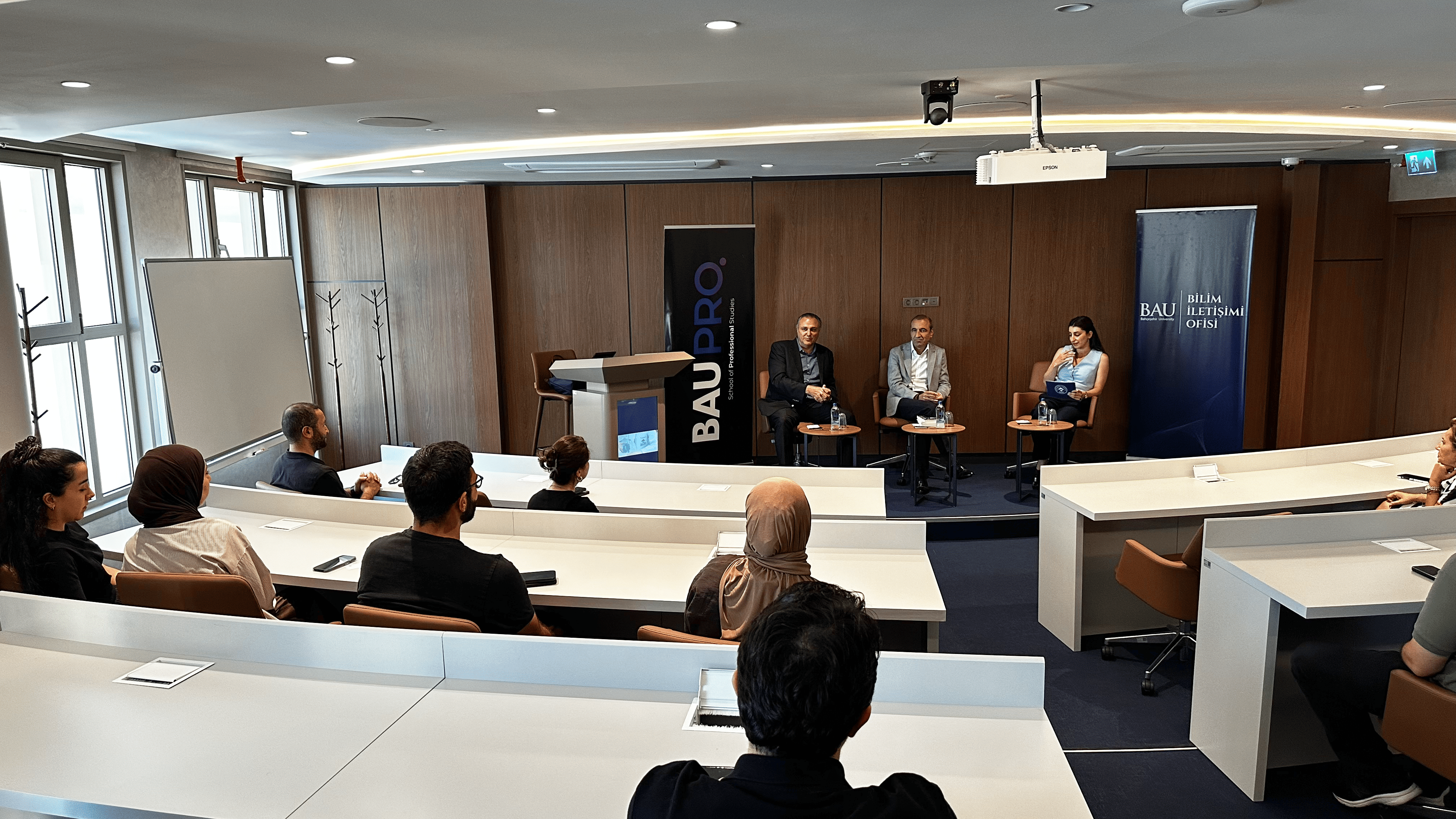
Organized in collaboration with Bahçeşehir University’s Science Communication Office and BAUPRO, the Science Café event addressed the impact of artificial intelligence, data, and digital transformation on future professions, the skills gaining prominence in the changing world of work, and the role of university-industry collaboration in this transformation, with the participation of representatives from academia and industry.
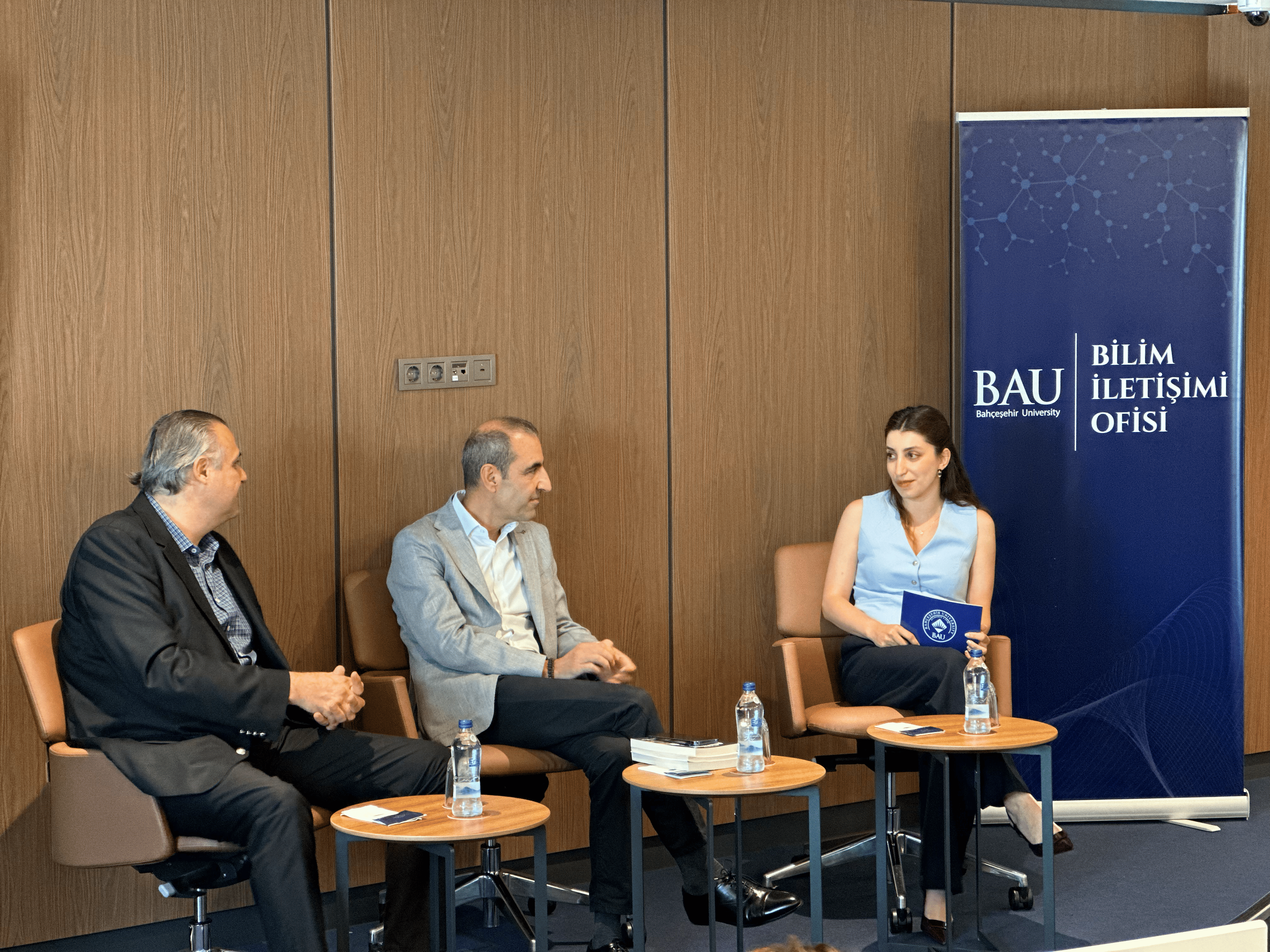
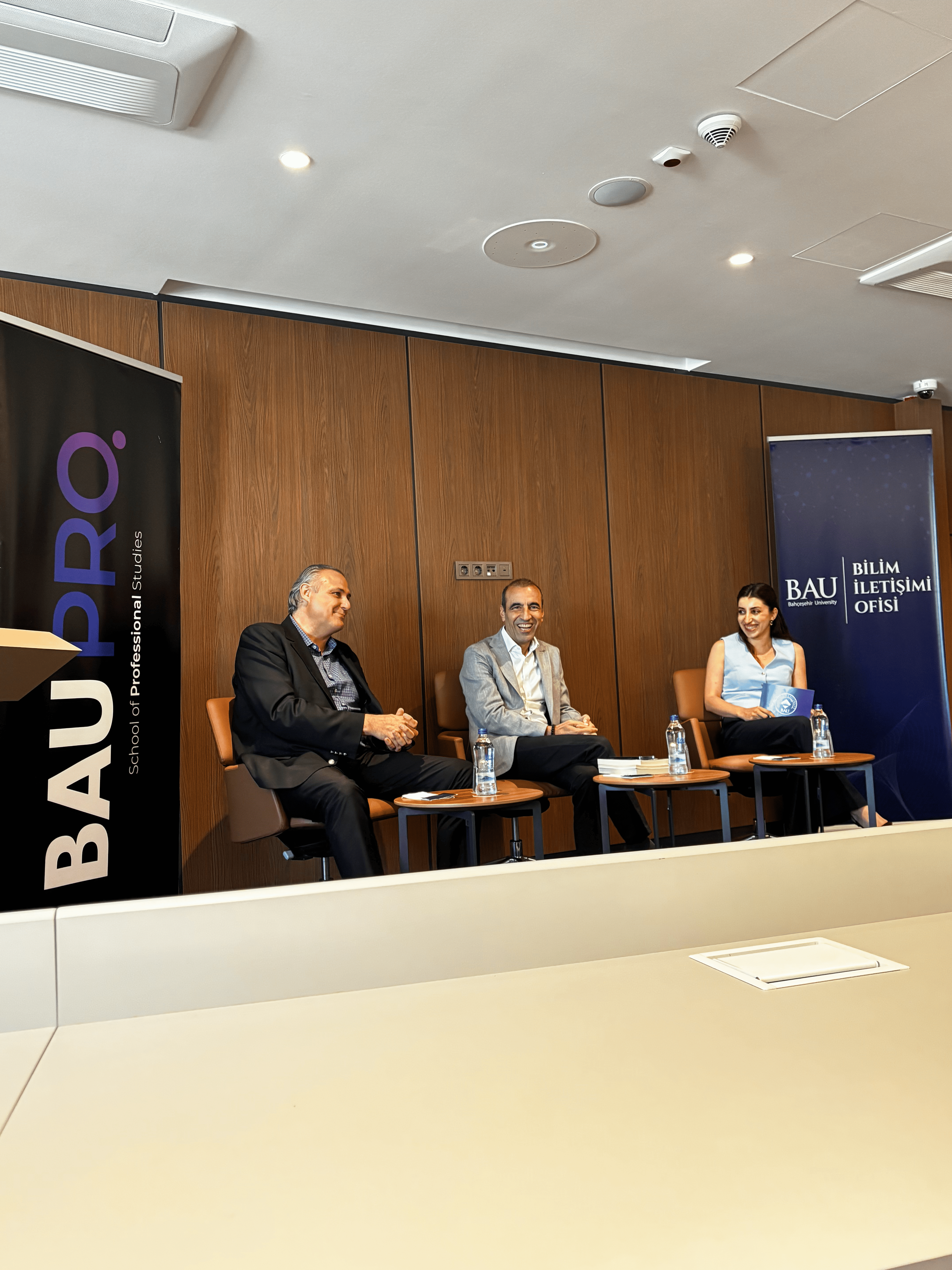
The Science Café event titled “Professions of the Future: Careers Shaped by Artificial Intelligence, Data, and Digital Transformation,” organized in collaboration with Bahçeşehir University’s Science Communication Office and BAUPRO, was held under the moderation of Assist. Prof. Güneş Akça. During the event, Prof. Dr. A. Arif Ergin, Dean of Bahçeşehir University’s Faculty of Engineering and Natural Sciences, and Mehmet Ali Tombalak, Chairman of the Board of Directors of TÜBİSAD, shared their assessments on the impact of artificial intelligence on future professions, the changing world of work, and the skills of the future.
Contrary to the widespread perception that artificial intelligence will eliminate many professions, the panel emphasized that, when used correctly, it is a powerful technology that enhances individual productivity, improves business processes, and creates new opportunities. The speakers stated that, rather than approaching artificial intelligence with concern, adapting to change by using the technology effectively and developing new skills would provide significant advantages in the future world of work.
Mehmet Ali Tombalak, Chairman of the Board of Directors of TÜBİSAD, stated that artificial intelligence is not a tool that replaces humans but one that strengthens human potential, emphasizing that it would make significant contributions, particularly in fields where Türkiye is strong, such as healthcare, education, and agriculture. Noting that artificial intelligence would make individuals’ abilities more visible and help them stand out, Tombalak said that, alongside technical knowledge, uniquely human skills such as creativity, intuitive thinking, communication, and problem-solving would become increasingly important in the future world of work.
Expressing that he was impressed by Bahçeşehir University’s approach, which focuses on revealing each individual’s strengths and potential rather than evaluating students solely on their academic achievements, Tombalak emphasized that guiding students according to their individual potential, rather than classifying them as “the most successful” or “the smartest,” is far more valuable for the future of education. He also stated that university-industry collaboration plays a critical role in developing the qualified workforce of the future. Tombalak noted that strong collaborations established between academia and industry make significant contributions to students’ gaining practical experience, engaging with current technologies, and developing the competencies required by the business world before graduation.
Prof. Dr. A. Arif Ergin, on the other hand, stated that artificial intelligence is bringing about a significant transformation in education and working life, noting that students are now using artificial intelligence as an academic assistant. Emphasizing that artificial intelligence is an important tool that facilitates access to information and accelerates production processes, Ergin underlined the importance of preserving critical thinking and reasoning skills while benefiting from this technology. Ergin stated that information provided by artificial intelligence should be questioned and evaluated, adding that human abilities to analyze, interpret, and make sound decisions would remain indispensable despite technological advancements.
In his speech, Ergin stated that university education is not merely about obtaining a diploma, emphasizing that theoretical knowledge must be supported by practical application. Noting that students’ participation in projects throughout their university education, gaining practical experience, and translating the knowledge they acquire into practice are of great importance for their professional development, Ergin said that practice-oriented education and lifelong learning are indispensable for adapting to the changing world of work.
The ethical dimension of artificial intelligence was also addressed during the event. The speakers noted that the negative consequences of artificial intelligence may arise not from the technology itself but from the way it is used, drawing attention to the importance of using technology in accordance with ethical principles and with consideration for social benefit.
At the Science Café event, the participants comprehensively discussed, from academic and industry perspectives, how artificial intelligence, data, and digital transformation are shaping future professions; the skills that will stand out in the changing world of work; the importance of practice-oriented education; the preservation of critical thinking and reasoning skills; the principles of ethical use; and the role of university-industry collaboration in developing the qualified workforce of the future.
Tarih: 29.07.2026